Do You Need a Music Licence for Yoga Classes? A Simpler Option for UK Teachers
If you play commercially released music in a UK yoga class, yes: you'll normally need TheMusicLicence from PPL PRS, which is an annual fee that renews every year. But there's a simpler route. If you use music that isn't registered with PPL or PRS, such as Mishi's, the licence you buy with the track is all you need. You buy it once and it's yours permanently, with no annual fee, no forms and no working out which classes count. This guide explains both options and how much you could save.

Do yoga teachers need a music licence?
Yes, if the music you play is managed by PPL or PRS for Music, which covers most commercially released music. Playing a recording in public without permission infringes copyright under the Copyright, Designs and Patents Act 1988, and a class counts as public even if it's small.
For that music, the usual route is TheMusicLicence from PPL PRS. In short:
Who needs it: instructors who run their own classes in halls, community centres and similar venues. If you teach at a gym or studio, check whether their licence covers you.
What it costs: PPL PRS's own example is an instructor running three classes a week for 50 weeks, which comes to £345 a year plus VAT. It's an ongoing fee, not a one-off.
Online classes: these have separate rules. Live and on-demand classes are treated differently, and some platforms aren't covered at all.
It works, but it's another bill, another renewal date and another set of rules to keep on top of.
Can I use Spotify in my yoga class?
No. Spotify's own support page says it's for personal, non-commercial use only, and it names dance studios among the places it can't be played. Holding TheMusicLicence doesn't change Spotify's terms. We cover this in more detail in From Spotify to Soundscapes: Why Free Playlists Aren't Enough for Professionals.
What music can I play without a licence?
You don't need TheMusicLicence for music that isn't registered with PPL or PRS. That means music you've made yourself, or music bought from a creator who licenses it to you directly.
That's how Mishi works. None of Mishi's wellness music is registered with PPL or PRS, so the Mishi licence is the only one you need. The Commercial Use licence covers one practitioner or business owner and lets you:
play the music during paid classes, sessions and programmes, such as a yoga class, a therapy session or a guided meditation course
use it in your own videos, podcasts and social media, including monetised content on YouTube or Instagram
include it in courses, programmes or digital products you sell, as part of a larger piece of work
If you run a practice with more than one practitioner or location, there's a Commercial Use (Multi) licence instead.
A word of caution on other sellers: "royalty-free" doesn't always mean free of PPL and PRS. Some royalty-free music is still registered with them. Before you use it in class, check two things with the seller: that their licence allows use in paid classes, and that the music isn't registered with PPL or PRS.
How much could you save?
Quite a lot, especially over time. Here's how the two routes compare for a teacher running three classes a week:
TheMusicLicence (PPL PRS): £345 plus VAT a year in PPL PRS's worked example, paid again every year. At that rate, three years comes to £1,035 plus VAT. Online classes can need extra licences on top.
Mishi Commercial Use licence: Typically £29 per track, bought once, and the licence is permanent. A collection like Chakra Balance is £34.99. Ten individual tracks would cost £290 in total. You never pay for them again, and there's no separate streaming licence for your own videos.
To be fair to PPL PRS, their licence gives you access to almost all commercially released music, while a Mishi licence covers the Mishi tracks you buy. But most yoga teachers don't need the whole music industry. They need a steady set of calm, well-made tracks that suit their classes. If that's you, buying the music outright is simpler and, over a few years, usually cheaper.
A quick checklist before your next class
Check where your music comes from. Streaming apps, downloads, libraries or your own recordings.
Stop using Spotify or other personal streaming apps in class. Their terms rule it out.
For any other music, ask two questions: does the licence cover paid classes, and is the music registered with PPL or PRS? If it is, you'll need TheMusicLicence as well.
If you'd rather skip the annual fee, build your class music from sources like Mishi, where one licence covers everything.
This article is general information, not legal advice. If you play any PPL or PRS music, check your situation with PPL PRS directly.
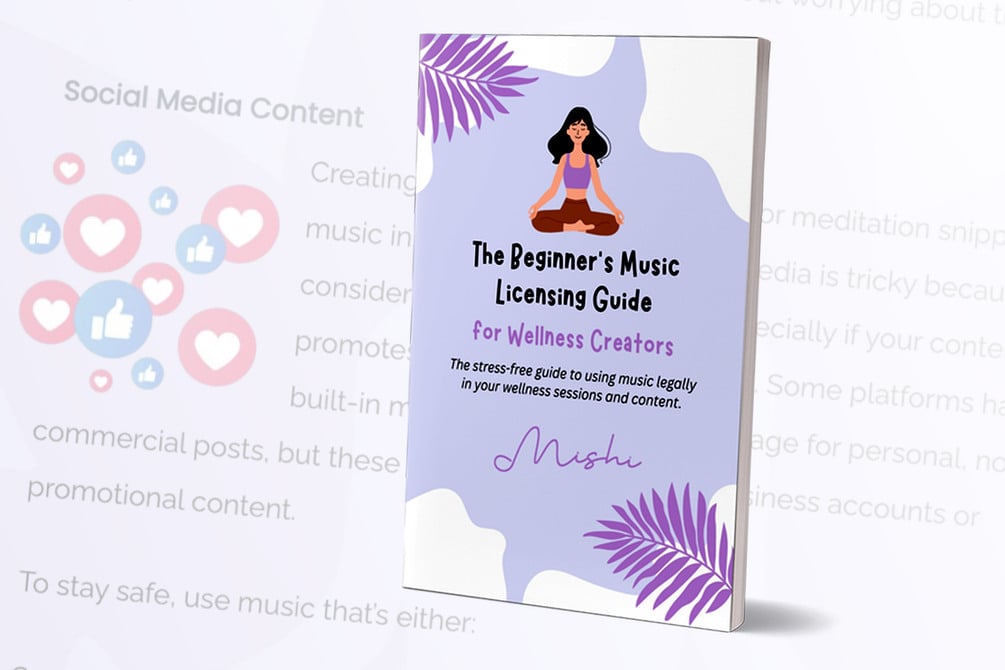
Get the full music licensing guide
If you'd like to go further, Mishi has a guide to music licensing for wellness creators. The guide is a free PDF: create a Mishi account and you'll find it waiting in your downloads area.
Music you can use in class, with one licence
If you'd like to start building a class playlist that's covered by a single licence, try Inner Peace, a calming blend of soft bells, chimes, birdsong and flute, or the first volume in my Solfeggio collection. Both are available with a permanent Commercial Use licence: buy once, then play them in class and use them in your videos for good, without ever thinking about PPL or PRS for them.


Comments